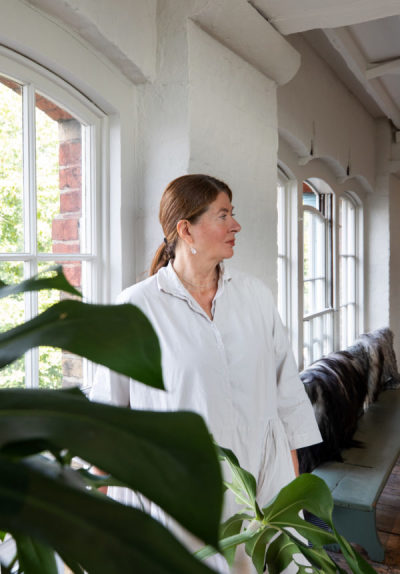
A Human-Centred Design Practice
Ilse Crawford is a British designer, teacher and creative director, and the founder of the London-based practice Studioilse. Her work spans interiors, furniture, objects, brand strategy and design education, yet it remains grounded in one clear principle: design should address genuine human needs and help people live with greater comfort and dignity.
Rather than treating design primarily as a visual style, Crawford considers how a space is experienced by the body. Light, sound, touch, temperature, material and interpersonal distance all influence whether an environment feels reassuring and easy to inhabit. Her work builds atmosphere through proportion, materiality, use and carefully considered relationships between people and place.
Space as a Frame for Life
Studioilse approaches design as a system connecting physical experience, emotional wellbeing, social relationships and environmental responsibility. Whether working on a home, hotel, restaurant, school, workplace or public interior, the studio begins with everyday behaviour and asks how design can support rest, conversation, work, eating and privacy.
This thinking is clearly expressed at Ett Hem in Stockholm. The conversion of an Arts and Crafts building into a twelve-room guesthouse softens the conventional division between the public and operational areas of a hotel. Flexible spaces, natural materials and a domestic scale allow hospitality to feel integrated into daily life rather than delivered through a rigid sequence of services.
For Cathay Pacific’s airport lounges, Studioilse applied the same principles to demanding, high-traffic environments. Comfort, privacy, natural materials, clear circulation and thoughtful service replaced institutional formality. The aim was not luxury as decoration, but an environment capable of reducing the physical and emotional strain of travel.
Beyond Interiors
Crawford’s practice also extends into furniture and product design. The thirty-piece Sinnerlig collection for IKEA brought together furniture, lighting and tabletop objects made with tactile materials including cork, ceramic, glass, seagrass and bamboo. It explored how natural materials, useful forms and accessible pricing could bring sensory richness into ordinary domestic life.
At Refettorio Felix in London, Studioilse transformed a community hall into a kitchen, dining room and support centre serving people in socially vulnerable circumstances. A warm and functional interior helped create a setting in which hospitality could communicate dignity, belonging and care.
Education and Lasting Influence
Crawford also founded the Man and Wellbeing department at Design Academy Eindhoven and led it for two decades. Her teaching extended her concern with sensory experience, ethics and social responsibility, encouraging designers to understand their work as part of larger human and environmental systems.
Across hotels, homes, airport lounges, furniture and community spaces, Ilse Crawford places lived experience at the centre of design. Her work is less concerned with novelty than with whether a space or object can continue to support physical comfort, emotional wellbeing and social connection over time.
Her practice demonstrates that design is not only about how environments and objects appear, but how they are touched, used and felt—and how they gradually become part of everyday life.