GUIDE · INTERIOR LIGHTING · DESIGN PRACTICE
照度、色温、显色指数都达标,空间却仍显得平、冷或刺眼。问题往往不在某一个灯具,而在于亮度层级、光色一致性、材料反射、眩光、控制场景与现场交付没有被同时管理。
Illuminance, CCT and colour rendition may all meet the brief, yet a finished space can still feel flat, cold or glaring. The problem often lies not in one luminaire, but in the missing coordination of hierarchy, colour, material response, glare, controls and delivery.
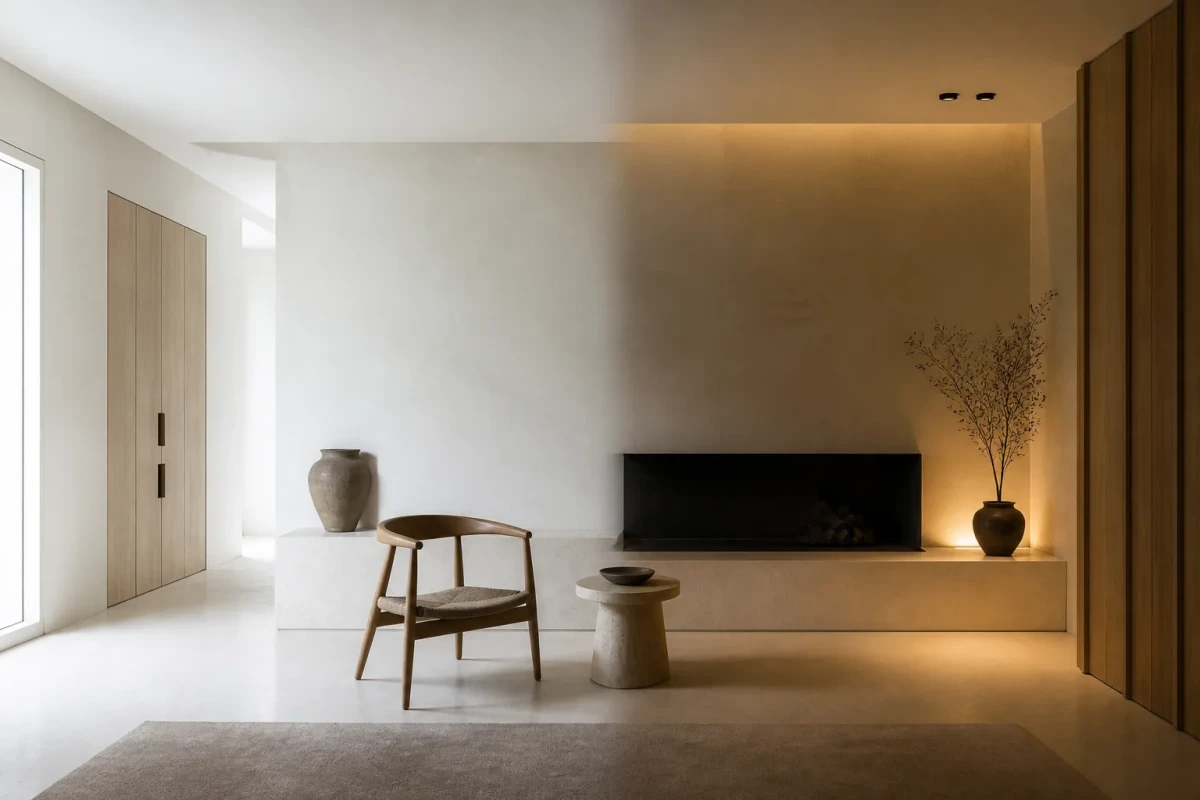
一张灯具表可以证明产品被选过,却不能证明空间会呈现预期的光感。真正有效的照明协同应贯穿概念、选样、深化、施工、调试和交付。以下七项不是法规条文或机构排名,而是01DES依据常见室内项目流程整理的编辑检查框架。
A luminaire schedule proves that products were selected; it does not prove that the intended atmosphere will exist. Effective lighting coordination runs from concept and sampling through detailing, construction, focusing and handover. These seven issues are an 01DES editorial framework—not a code or institutional ranking.
参数合格,不等于空间有层次
Correct parameters do not guarantee spatial hierarchy
照度回答的是某个表面接收到多少光,却不能单独说明人眼会把哪里看成视觉中心。一个空间即使达到目标工作面照度,如果天花、墙面、展陈、桌面和人的面部接近同一亮度,仍可能显得均匀而缺少重点。
Illuminance describes how much light reaches a surface, but it cannot by itself determine what the eye reads as the visual focus. Even when target task-plane levels are met, a room can still feel flat if ceilings, walls, displays, tables and faces sit at nearly the same brightness.
设计阶段需要同时确认:哪些区域承担环境光,哪些表面建立空间亮度,哪些对象需要重点照明,哪些位置允许保持阴影。墙面洗亮、桌面照明和装饰重点光的作用不同,不应只用一张平均照度计算图代替。
The design must define which zones provide ambient light, which surfaces establish brightness, which objects deserve emphasis and where shadow should remain. Wall washing, task lighting and accent lighting perform different roles; an average illuminance plot cannot replace that hierarchy.
色温相同,也可能看起来不一致
The same CCT can still look different
两款灯具都标注3000K,并不保证点亮后完全同色。相关色温只是对光色外观的近似描述;不同产品的色品位置、光谱分布、批次控制和调光状态仍可能不同。相邻灯具、线性灯与射灯、装饰灯与建筑照明混用时,这种差异更容易被看见。
Two luminaires labelled 3000K are not guaranteed to appear identical. CCT is an approximate description of appearance; chromaticity, spectral distribution, batch control and dimming behaviour may still differ, especially when linear, spot, decorative and architectural sources share one view.
色温也不能脱离材料讨论。暖木、灰色石材、彩色织物和白色涂料在不同光谱下的观感可能改变;设计师应以真实材料样板和候选灯具共同测试,而不是只比较产品页上的色温数字。
CCT also cannot be separated from material. Warm timber, gray stone, coloured textiles and white paint can shift under different spectra. Designers should test real samples with candidate luminaires rather than compare catalogue numbers alone.
高显色指数,仍不足以说明颜色会自然
A high CRI still does not guarantee natural colour
常用显色指数可以帮助初筛光源,但单一平均值不能完整描述不同颜色的偏移方向、饱和度变化和红色表现。IES的TM-30方法以平均色彩保真度、综合色域及分色相信息补充单一指标,为设计者提供更完整的判断框架。
CRI can help with initial screening, but a single average cannot fully describe hue shifts, saturation changes or red rendering. The IES TM-30 method supplements it with average fidelity, gamut and hue-specific information.
指标应服务于使用目的。零售可能重视商品颜色,餐饮关注食物与肤色,住宅希望木材和织物更温润,展览则可能追求接近参考光源的保真。参数不能反过来替代设计判断。
Metrics should serve the intended use: retail may prioritise merchandise, hospitality food and skin tones, residential projects warmth in timber and textiles, and exhibitions fidelity to a reference source. Numbers should not replace design judgement.
看不见灯具,不代表没有眩光
A concealed luminaire can still create glare
深防眩、暗藏或无边框灯具能够降低光源的直接暴露,但眩光还与光源亮度、观察角度、背景亮度、灯具位置及反射表面有关。CIE的室内不舒适眩光评价明确考虑观察者位置与视线方向;对于亮度分布高度不均匀的LED光源,传统平均亮度评价也存在局限。
Deep-recessed, concealed or trimless luminaires can reduce direct exposure, but glare also depends on source luminance, viewing angle, background, position and reflective surfaces. CIE glare evaluation explicitly considers observer position and view direction, while highly non-uniform LED sources reveal limits in average-luminance methods.
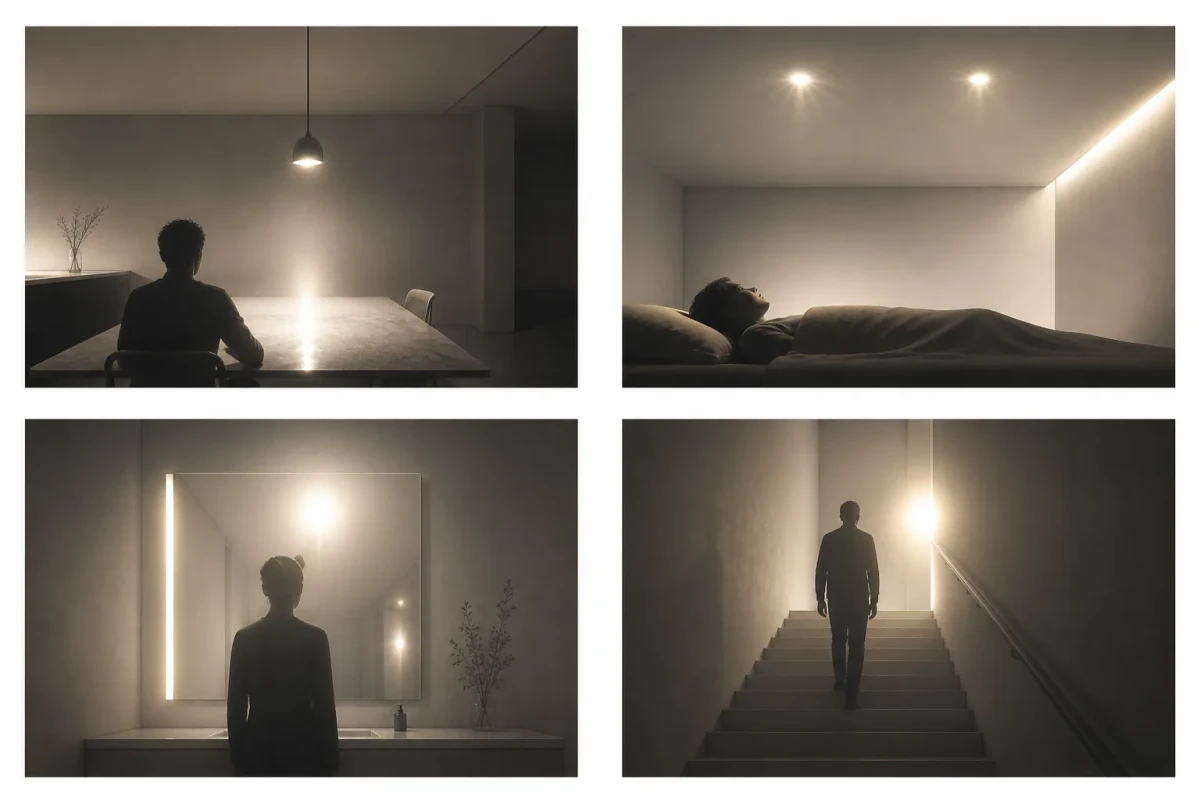
坐姿视线、床上仰视、镜面前站立、楼梯上下行和零售陈列前停留,都可能形成不同的眩光条件。高光石材、镜面金属和玻璃还会把原本隐藏的光源重新带回视野。
Seated views, reclining in bed, standing at a mirror, moving on stairs or pausing at a display all create different glare conditions. Polished stone, mirrored metal and glass can return a concealed source to the field of view.
材料不是被动背景,而是光环境的一部分
Materials are part of the luminous environment
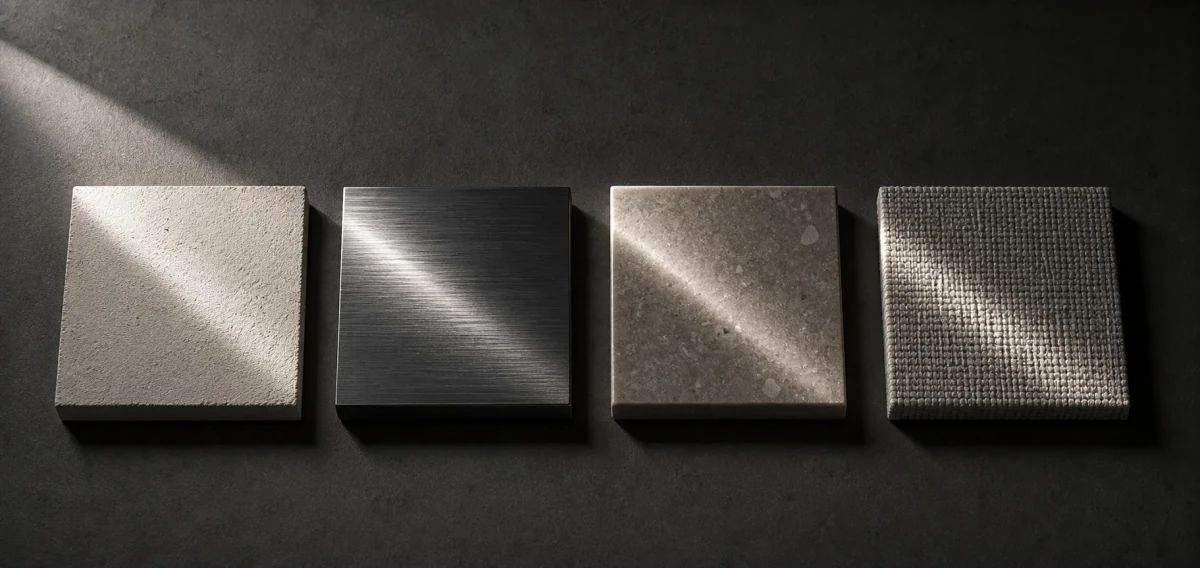
同一束光落在哑光涂料、拉丝金属、亮面石材和纹理织物上,会形成不同的反射、阴影和高光。材料的颜色、光泽、纹理尺度与安装方向都会改变最终观感。只在材料室看样板,或只在灯具展厅看光,都不足以预测二者在项目现场的组合效果。
The same beam produces different reflection, shadow and highlight on matte plaster, brushed metal, polished stone and textured textile. Colour, gloss, texture scale and installation direction all affect the result; neither a material library nor a lighting showroom can predict the combination alone.
效果图中被柔化的镜面反射,现场可能成为刺眼亮斑;渲染中清晰的纹理,现场可能因入射角不合适而变平;浅色墙面也可能抬高环境亮度并削弱重点照明的对比。
A softened reflection in a rendering may become a harsh highlight on site; a clear texture may flatten under the wrong angle; pale walls may raise ambient brightness and dilute accent contrast.
效果图画了光,施工图却只画了灯
The rendering shows light; the drawing often shows only fixtures
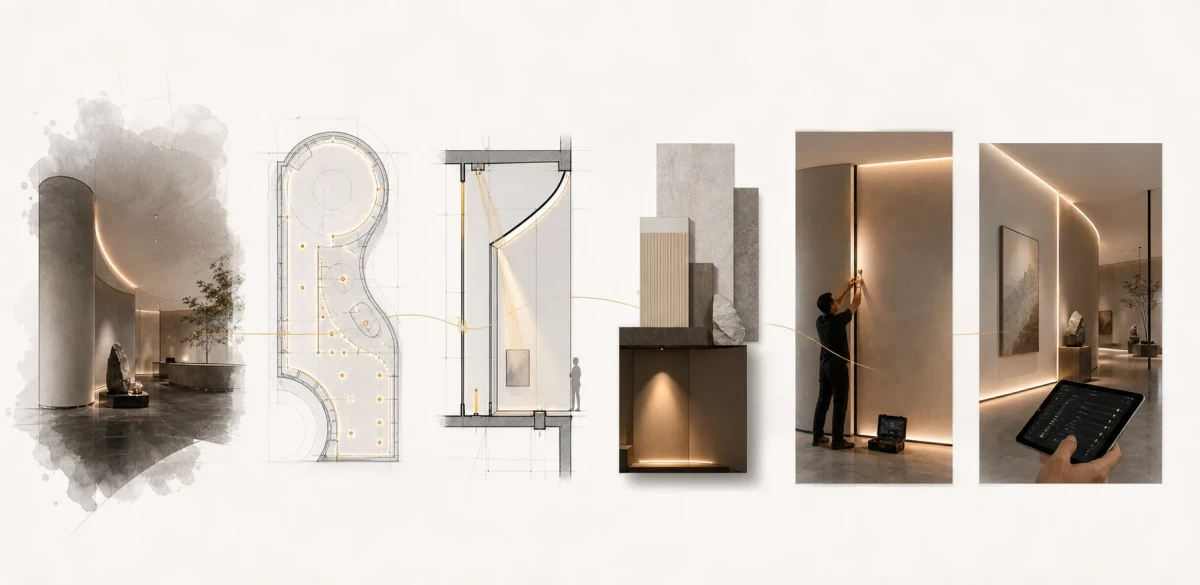
效果图通常表达墙面渐变、桌面光池、艺术品重点和天花暗槽,但进入施工图后,信息往往被压缩为灯具符号、回路编号和安装尺寸。若没有明确照射对象、瞄准方向、遮光附件、控制场景和调试目标,施工方只能按"装上并点亮"完成任务。
Renderings show wall gradients, pools of light, artwork accents and concealed coves, yet construction drawings often reduce these intentions to symbols, circuits and dimensions. Without targets, aiming, shielding, scenes and focusing criteria, installation can only deliver fixtures that switch on.
除了灯具表和天花图,重点区域应补充立面或剖面、瞄准说明、回路逻辑、调光范围以及与家具、艺术品、窗帘和设备的关系。可调射灯的最终角度通常也必须在现场完成。
Critical areas need elevations or sections, aiming notes, circuit logic, dimming ranges and coordination with furniture, art, curtains and equipment. Adjustable spotlights still require final aiming on site.
灯亮了,不等于项目完成了
Lights on does not mean the project is finished
控制系统决定空间在不同时段和情境中的实际表现。复杂场景如果没有清晰命名、合理默认值、手动覆盖方式和使用说明,运营人员可能长期停留在一个场景,甚至绕过自动控制。美国能源部指南强调,传感器位置、校准、调试以及操作维护资料都会影响控制系统能否持续按预期工作。
Controls determine how a space behaves across time and use. Without clear scene names, sensible defaults, manual override and guidance, operators may remain in one scene or bypass automation. U.S. Department of Energy guidance stresses sensor placement, calibration, commissioning and operating information.
交付前应由设计、施工、供应商和运营方共同走查开门、营业、清洁、陈列调整、会议、夜间与闭店等场景,并明确更换光源或驱动后如何保持原有光色与调光表现。
Before handover, design, construction, suppliers and operators should walk through opening, trading, cleaning, display changes, meetings, night use and closing, including how replacement sources or drivers will preserve colour and dimming behaviour.
从灯具表,走向完整的灯光交付
From a fixture schedule to a complete lighting handover
好的室内照明不是把所有区域照得更亮,也不是为每个问题增加一个参数。它更像一次持续校准:空间层级是否清楚,材料是否被准确呈现,主要视点是否舒适,控制是否符合真实运营,设计意图能否在维护和更换之后继续保留。
Good interior lighting is neither about making every zone brighter nor adding another metric to every problem. It is a continuing calibration of hierarchy, material appearance, visual comfort, real operation and the survival of design intent through maintenance and replacement.
室内设计师不必替代照明顾问,但需要把视觉意图翻译成可选样、可画图、可调试、可验收的项目语言。参数是必要的起点;经过样板、图纸、调试和交付验证后,它们才真正成为空间体验。
Interior designers do not replace lighting consultants, but they must translate visual intent into a language that can be sampled, drawn, focused and accepted. Parameters are the starting point; mock-ups, drawings, commissioning and handover turn them into spatial experience.
配套下载 / DOWNLOADS
参考依据包括IES TM-30-24、CIE 117-1995、CIE 232:2019、CIE国际照明词汇、WELL v2 Light及美国能源部照明控制指南。本文为设计实践指南,不能替代项目所在地法规、专业计算、照明顾问意见或现场测量。