
FEATURE · SMART HOME · INTERIOR DESIGN
当灯光、窗帘、空调、地暖、安防和家电开始共同响应人的行动,室内设计面对的就不再是几块智能面板,而是一套深入墙体、吊顶、柜体、网络与日常行为的空间系统。
When lighting, curtains, climate, security and appliances respond together to human behaviour, interior design is shaping a system embedded in walls, ceilings, joinery, networks and everyday routines.
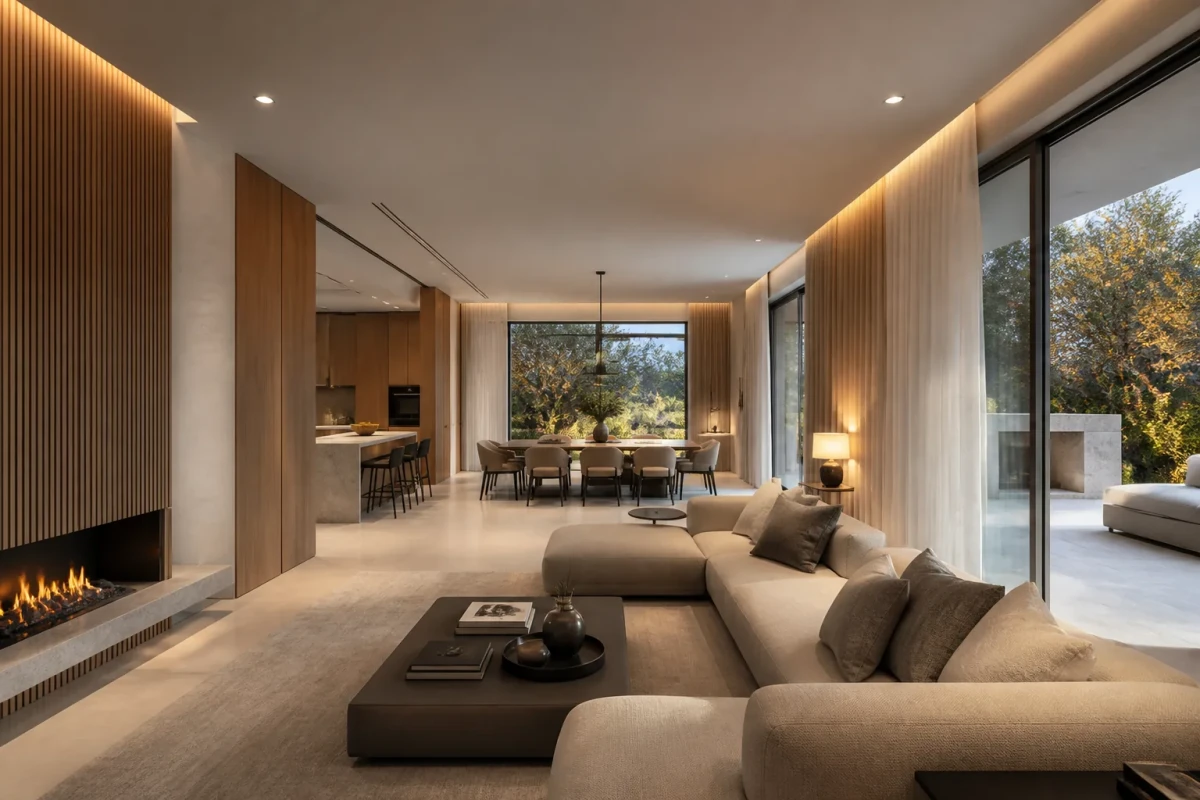
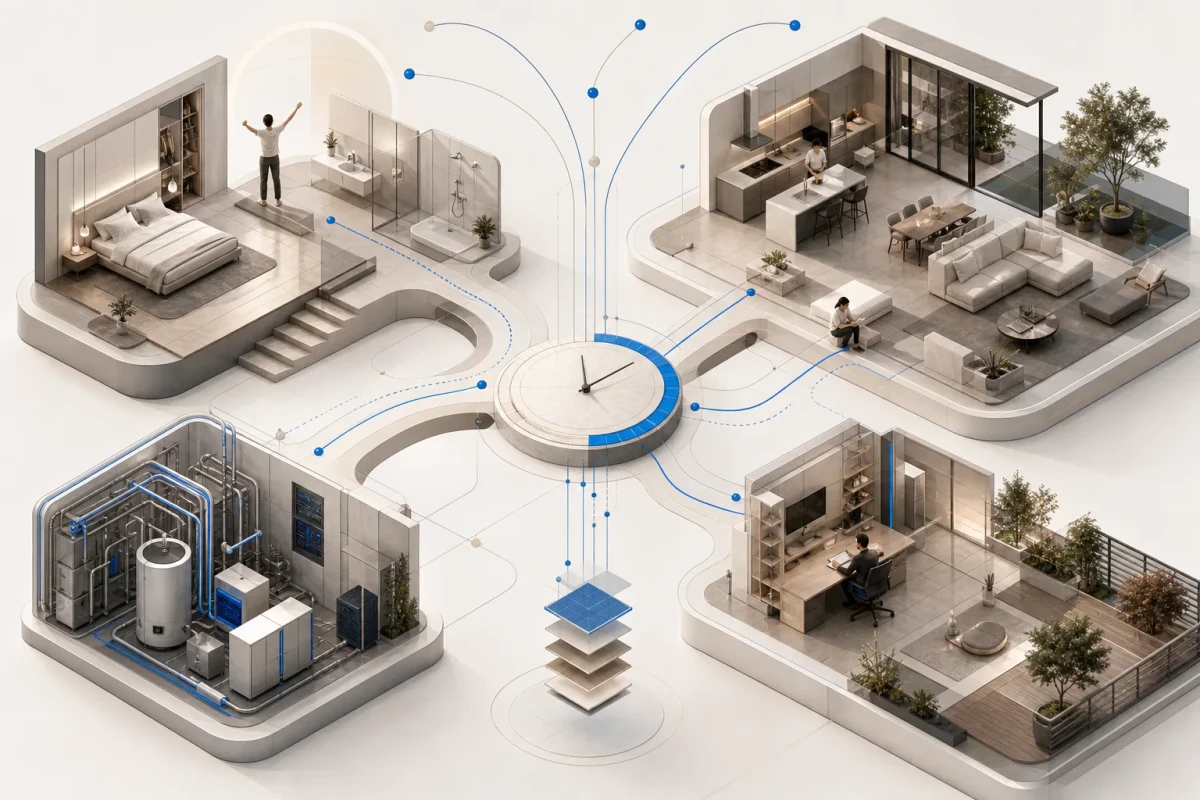
从设备清单转向生活场景
From device lists to lived scenarios
智能系统最容易出现的问题,是先列设备,后想用途。真正重要的问题是:居住者在什么时间、什么位置,希望空间发生什么变化?"回家"与"睡眠"都应先被理解为包含照明、窗帘、温控、安防和物理控制的生活场景。
The most common mistake is to list devices before defining their purpose. The essential question is what the space should do for its occupants at a particular place and time. Arrival and sleep should be understood as lived scenarios coordinating lighting, curtains, climate, security and physical control.
墙面与吊顶不再只是视觉界面
Walls and ceilings are no longer only visual surfaces
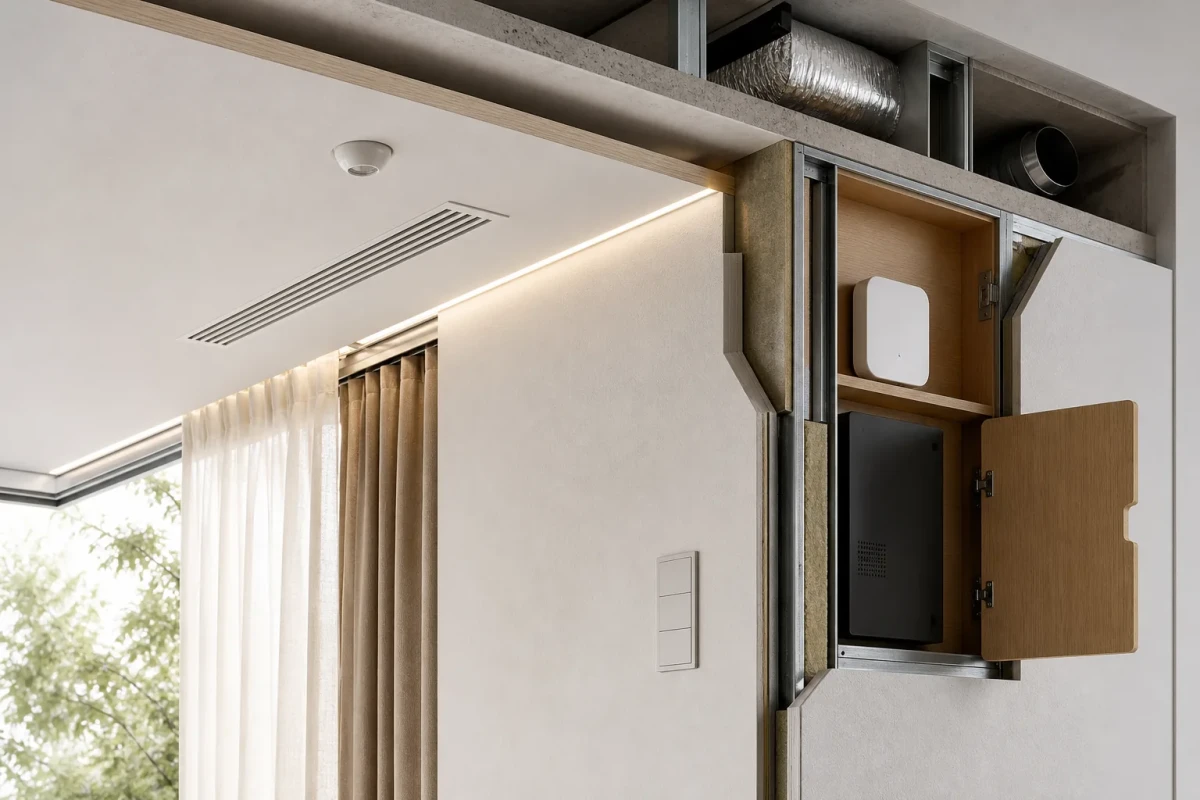
墙面与吊顶可能同时容纳控制面板、传感器、网关、驱动、风口和灯具。真正成熟的隐藏,是在有效覆盖、稳定信号、散热、供电和检修均得到保证后减少视觉干扰,而不是让设备简单消失。
Walls and ceilings may accommodate controls, sensors, gateways, drivers, air outlets and luminaires. Mature concealment reduces visual noise only after coverage, signal, ventilation, power and service access have been secured.
智能家电正在改写厨房和家政空间
Smart appliances are rewriting kitchens and utility spaces
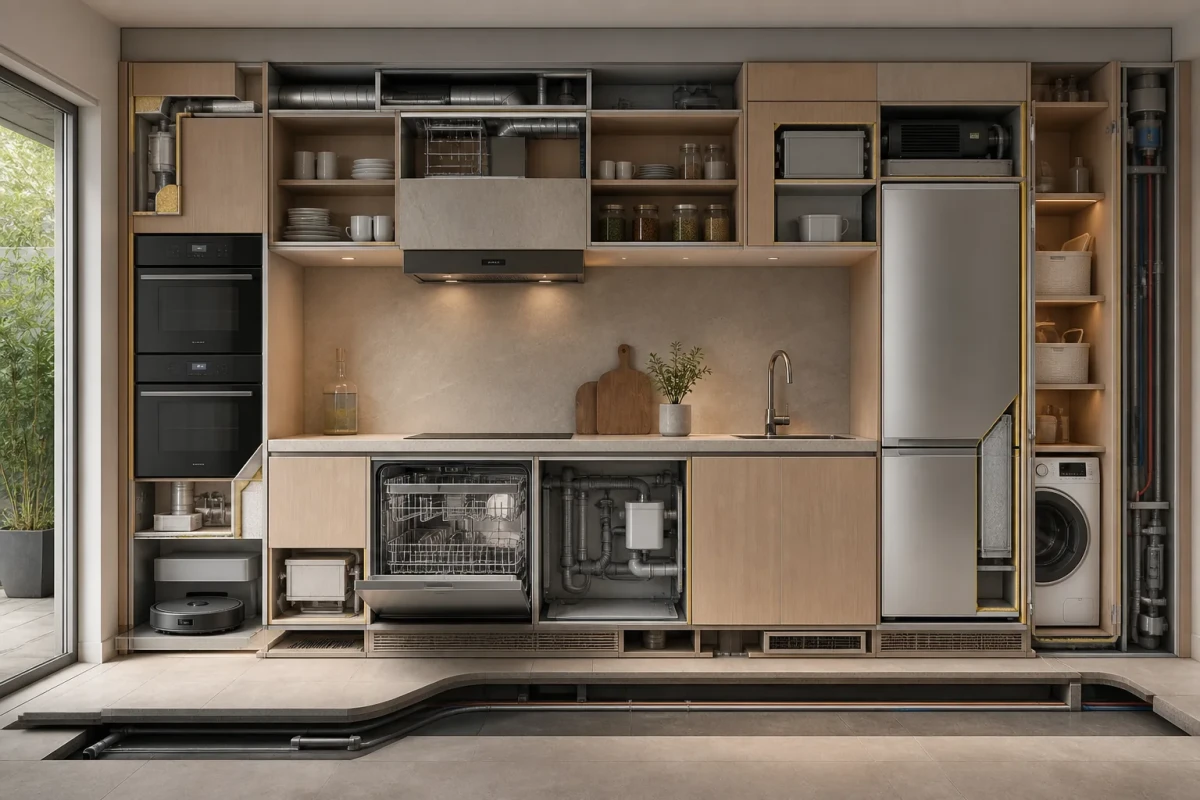
联网家电使柜体设计超越外形尺寸。门体开启、进排风、上下水、供电、网络、重置、过滤器更换和设备替换空间都必须在选型早期明确。扫地机器人基站也会影响路径、踢脚、地面高差和柜内散热。
Connected appliances push joinery beyond external dimensions. Door clearances, airflow, water, drainage, power, connectivity, resetting, filter changes and replacement space must be defined early.
灯光设计从回路控制走向情境编排
Lighting moves from circuit control to scenario design
智能灯光不仅表达灯位和回路,还需定义不同活动中的亮度、方向、遮阳位置及手动控制如何覆盖自动逻辑。更多场景并不等于更好;清楚的优先级和直觉式物理控制,比复杂的自动化数量更重要。
Smart lighting must define intensity, direction, shading and how manual commands override automation, not just positions and circuits. More scenes do not guarantee a better experience; clear priorities and intuitive physical control matter more.
开放标准减少孤岛,却不会自动解决空间问题
Open standards reduce silos, but not spatial problems
连接标准联盟于2026年发布Matter 1.6,涉及预配置、多生态共同管理和情境化温控建议等能力。但规范发布不等于所有产品已经支持;协议兼容也不能代替正确的位置、供电、网络覆盖与施工协调。
The Connectivity Standards Alliance released Matter 1.6 in 2026, including pre-configuration, multi-ecosystem management and context-driven thermostat suggestions. Publication does not mean every product implements these features.
维护与交付成为设计的一部分
Maintenance and handover become part of design
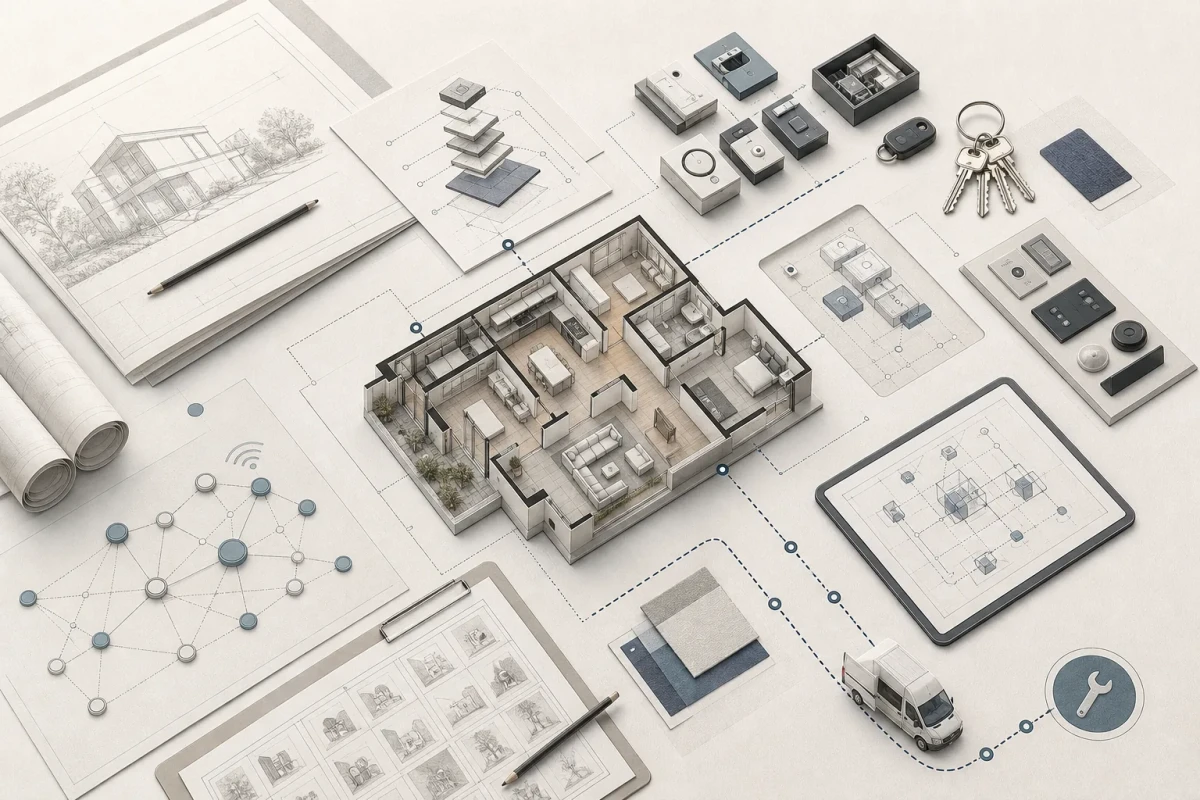
系统真正完成的时间,是住户能够理解、使用和维护它的时候。交付应包括设备清单、点位与网络关系、场景表、权限、故障处理、重置与替换原则;隐藏设备还需记录位置和检修方式。
A system is complete when residents can understand, use and maintain it. Handover should include equipment, point and network records, scene schedules, permissions, troubleshooting, reset and replacement guidance.
01DES观察:智能住宅最终设计的是选择权
01DES View: the real design outcome is choice
全屋智能最有价值的状态,不是让技术成为空间主角,而是让住宅能够随人、时间和生活变化调整,并在故障、更新或住户更替后保留基本可用性。设计师不必成为系统工程师,但必须把不可见的技术条件转化为可使用、可维护、可持续变化的空间。
Whole-home intelligence is most valuable when technology does not become the protagonist, but lets the home adapt while preserving basic usability. Designers must translate invisible technical conditions into usable, maintainable and adaptable space.

学习一下