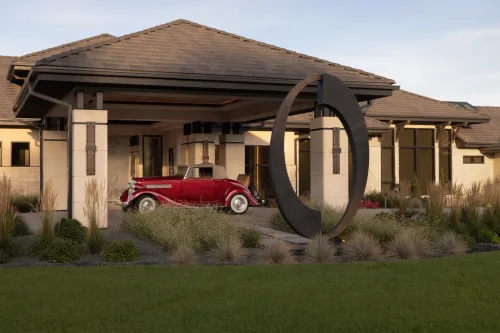
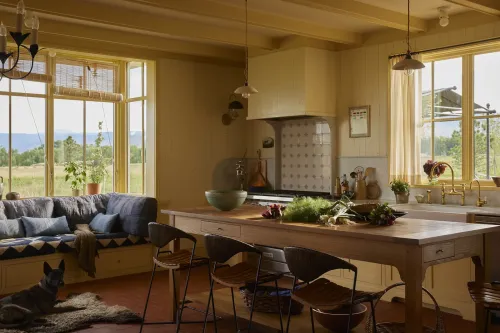
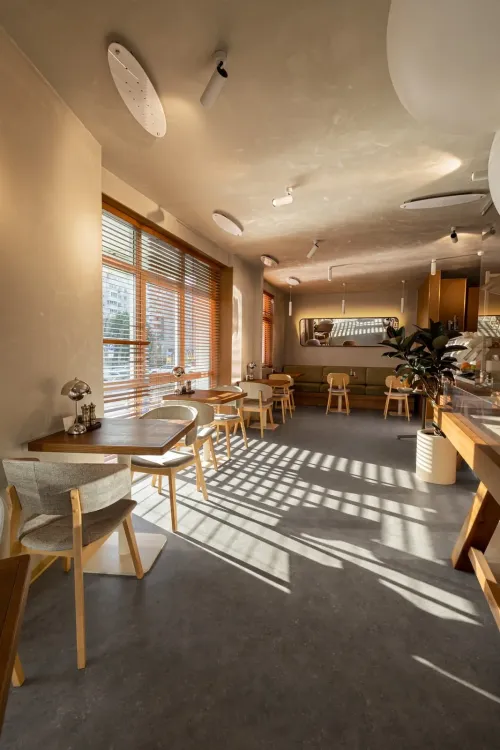
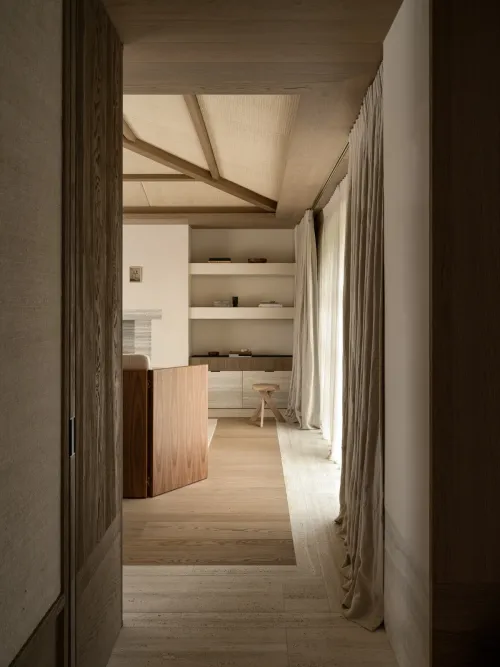
Lately, when I look at vacation rental projects, I often get a sense of déjà vu.
Trowel-finished concrete, travertine, natural wood, large expanses of negative space, and a glimpse of the natural landscape through the windows. The projects are all quite beautiful and well-executed. But after seeing so many of them, it’s hard to tell one from another.
Sometimes, I don’t even need to look at the entire photo gallery—just the first image is enough to guess what will appear in the rest. This is actually quite interesting.
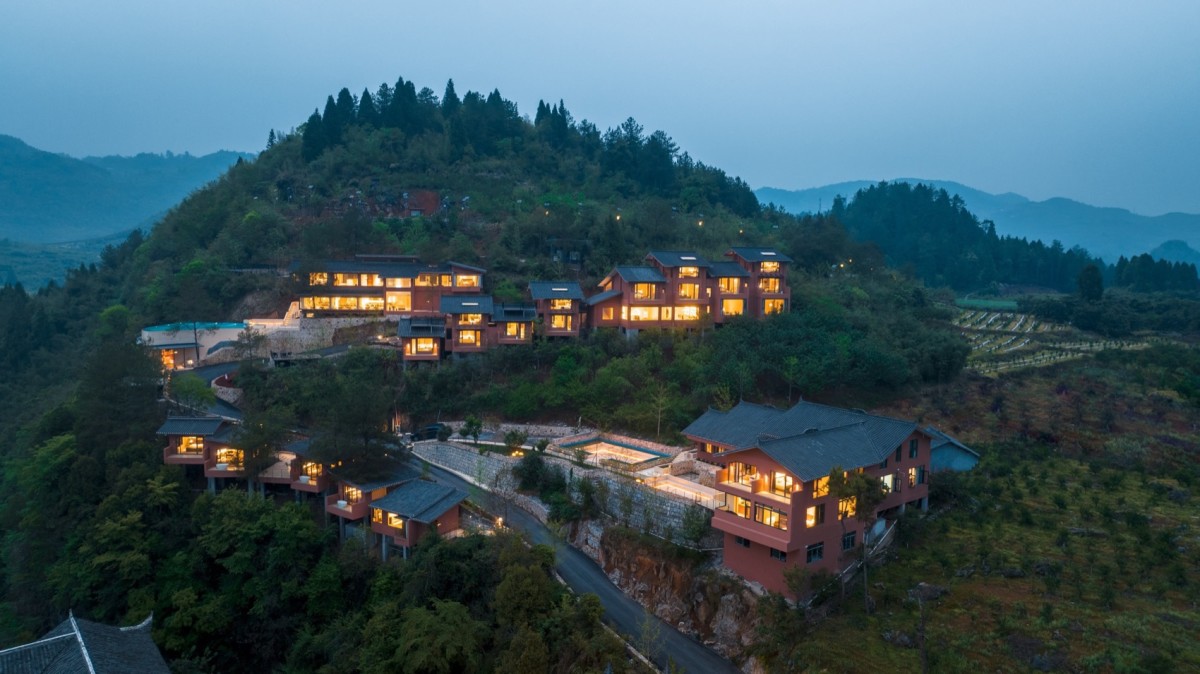
Photography / Project: “Deyunjian” Homestay in Erzhu Valley, Western Hunan / Rulin Architecture Photography: Chen Canming
Aesthetic appeal is becoming a shared consensus
In recent years, the overall aesthetic of domestic guesthouses has improved rapidly.
In the early days, people were still discussing how to make guesthouses “not look like hotels,” but now few worry that they might not be aesthetically pleasing. Designers, owners, photographers, and even consumers seem to have reached a fairly stable consensus on what constitutes “sophistication.”
This is precisely where the problem lies.
When a design language is repeatedly validated by the market, it naturally gets used over and over again. After all, projects aren’t experiments—especially commercial ones. Owners need to weigh investment against return, and designers must ensure their visions are realized.
So when I see a large number of similar spaces, I don’t think anyone is copying anyone else. More often than not, it’s simply that everyone is making relatively safe choices.
And as these safe choices become increasingly concentrated, spaces naturally start to look more and more alike.
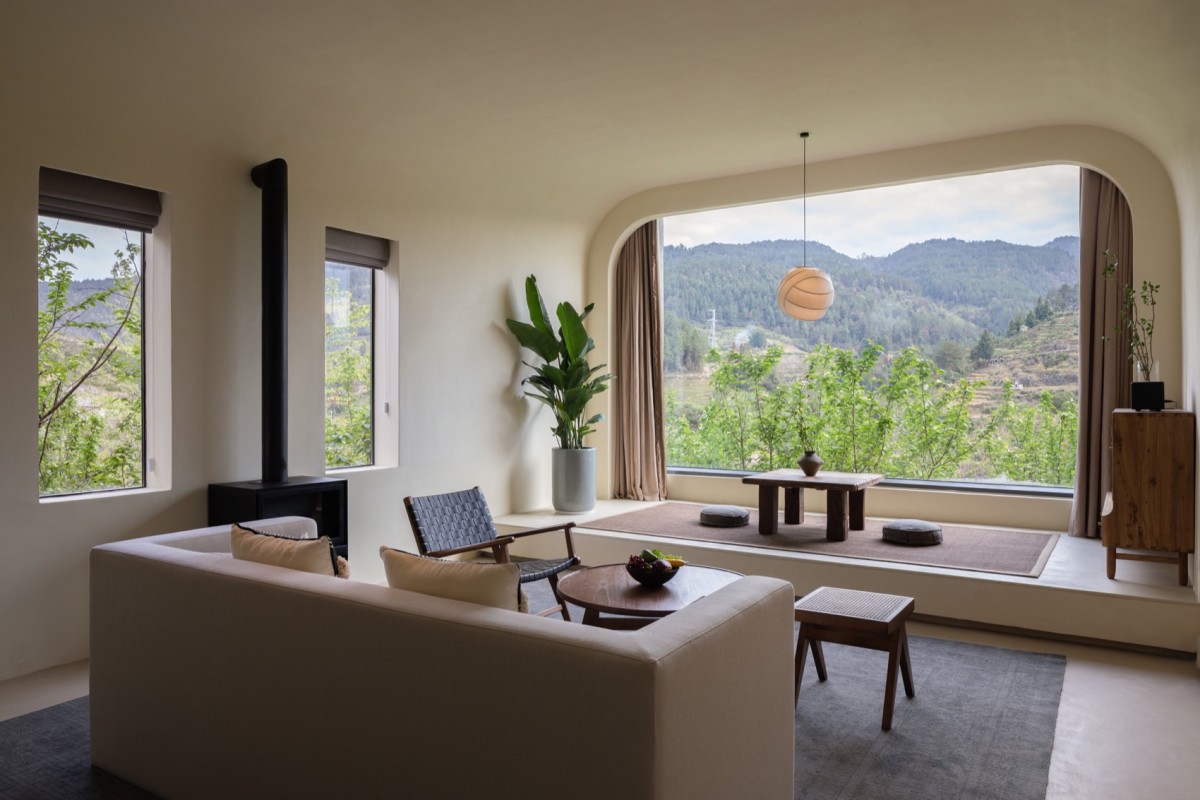
Photography / Project: Dieyunjian Homestay in Erzhu Valley / Renlin Architecture Photography: Wu Ang
Spaces are also adapting to smartphone screens
Another change is that guesthouses today rely more on online promotion than in the past. Many guests first discover a guesthouse not in person, but on their phones.
This has changed the design process to some extent.
When developing a design proposal, we pay more attention than before to whether a particular angle has a memorable quality. A staircase, a scenic window, or even a tree in the courtyard can all serve as visual highlights for social media.
This is perfectly normal. Homestays are, after all, commercial spaces; design cannot completely ignore how they’ll be perceived.
But photos and the real-life experience are not the same thing. Some spaces look perfectly polished in photos but may not be comfortable to actually stay in. To maintain the purity of the image, some essentials must be hidden; certain dramatic design choices may not be as pleasant in daily use as they appear in photos.
These issues are easily obscured through photography. After working on projects for a long time, you gradually realize:
“There’s actually quite a gap between a space that looks good on camera and one that’s truly functional.”{ {h63}}
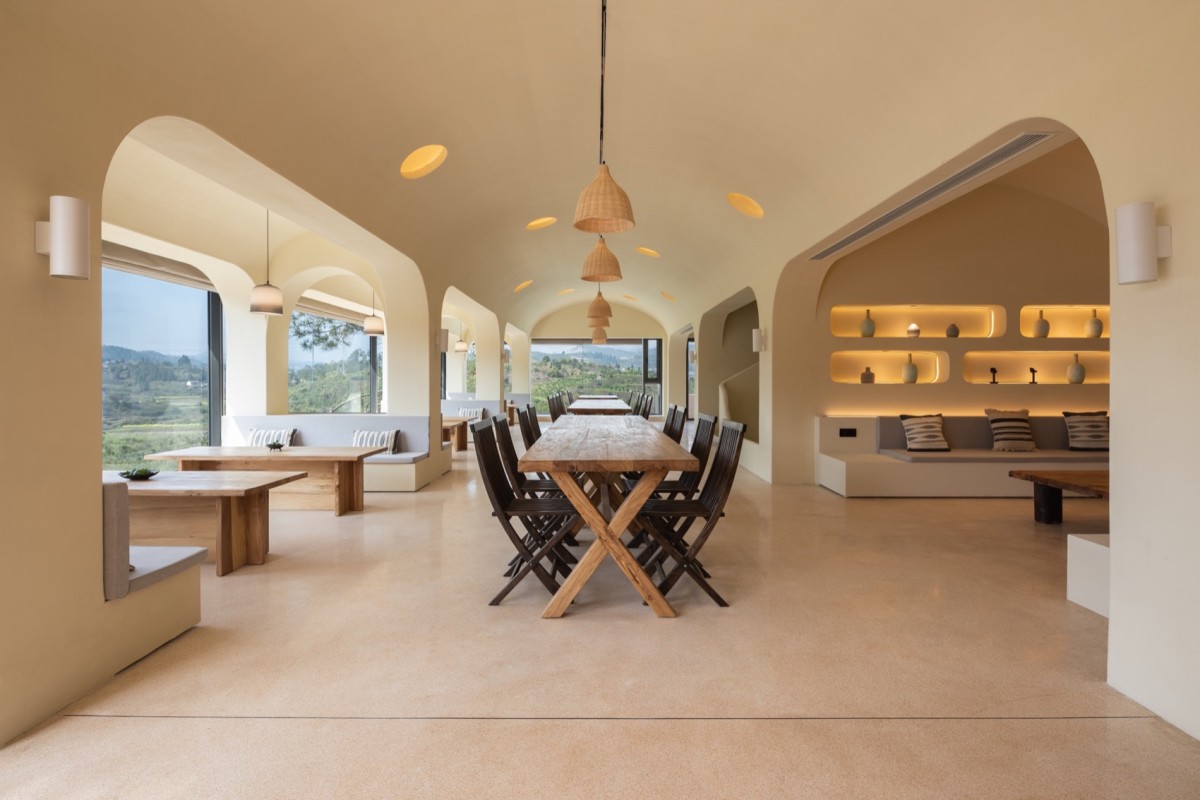
Photography / Project: Dezhu Valley Dieyunjian Homestay / Rulin Architecture Photography: Wu Ang
What concerns me more is the disappearance of “place”
Compared to the uniformity of styles, I think this issue is more worthy of discussion.
The biggest difference between a guesthouse and a regular hotel lies precisely in its relationship with its location. Whether you go to Yunnan, Fujian, Zhejiang, or western Sichuan, the climate, materials, building methods, and people’s lifestyles are all different. In theory, these differences should ultimately be reflected to some extent in the space itself.
But nowadays, I often see a situation where the view outside the window is completely different, yet the interior design language is very similar. If you were to cover the view outside the window, it would be hard to tell exactly where this space is located.
This is actually a bit of a shame.
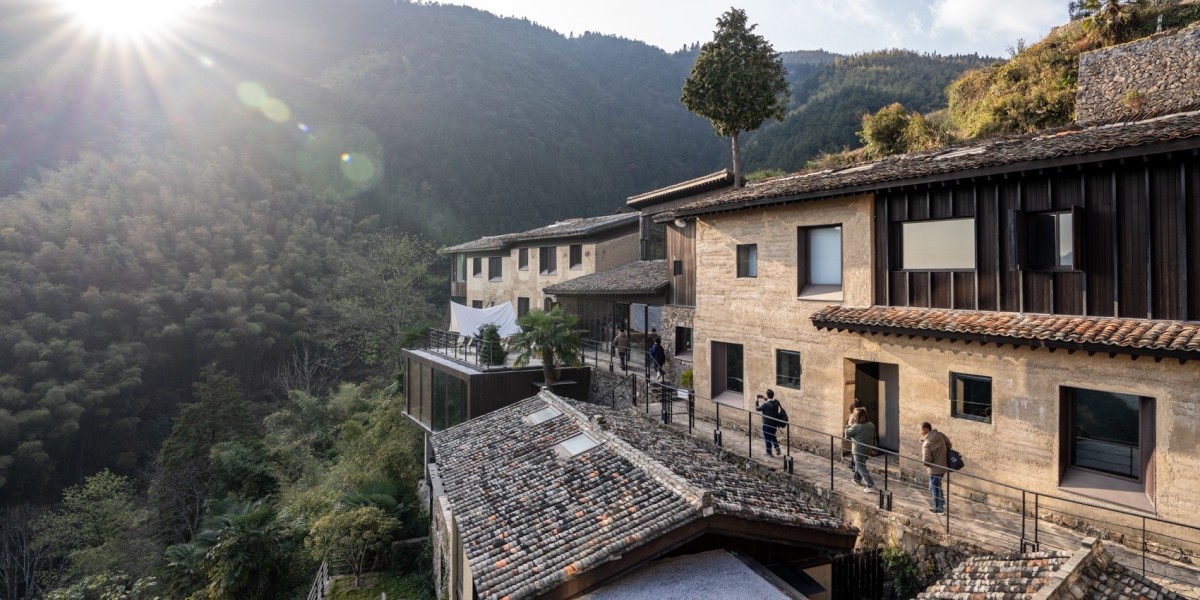
Photography / Project: Songyang · Feicui Phase II / line+ Architects Photography: Chen Xi + Jin Zixiong
Design is certainly not simply about bringing in local materials, nor is it about hanging a few so-called “symbols of regional culture.” What’s truly interesting is the unique character that emerges naturally in a space once you’ve come to understand a place.
Sometimes it’s an old wall; sometimes it’s just the placement of a window; or it might even be a very common local material. It may not be eye-catching, but it gives the space its own distinct character.
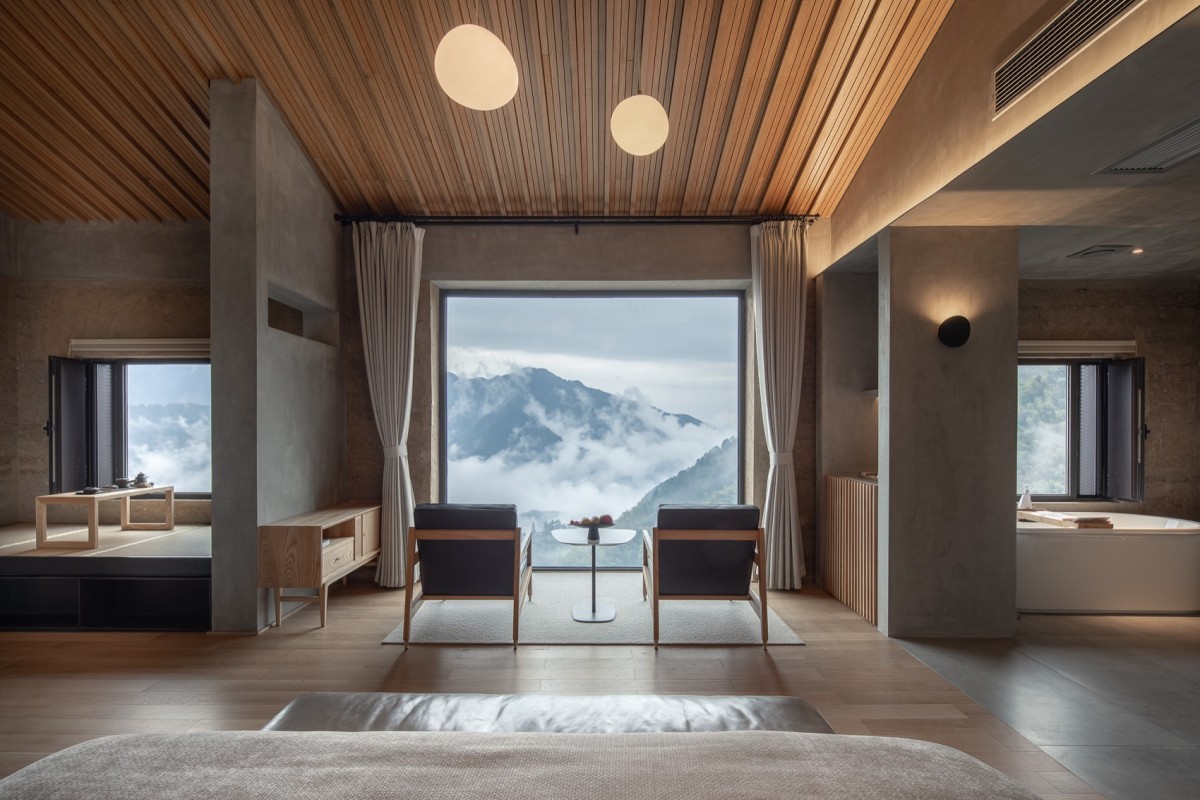
Photography / Project: Songyang · Fei Tsao Collection Phase II / line+ Architecture Studio Photography: Tang Xuguo
So the problem may not lie with microcement
Nowadays, when people talk about the homogenization of bed-and-breakfasts, it’s easy to attribute the cause to elements like wabi-sabi, microcement, and travertine. I don’t think that’s necessary.
There’s nothing wrong with the materials themselves, and it’s perfectly normal for them to be popular. Every era has its own distinct aesthetic. What truly influences the outcome is where the design process begins.
If a project starts with reference images, it’s easy to gradually end up resembling those images.
If it starts with the site itself, the result is usually much more complex—and harder to predict.
This is also why some vacation rentals may not seem particularly “conventional” at first glance, yet still hold up well when viewed years later. They aren’t designed to prove they belong to a specific style, but rather to solve the specific challenges of that particular location.
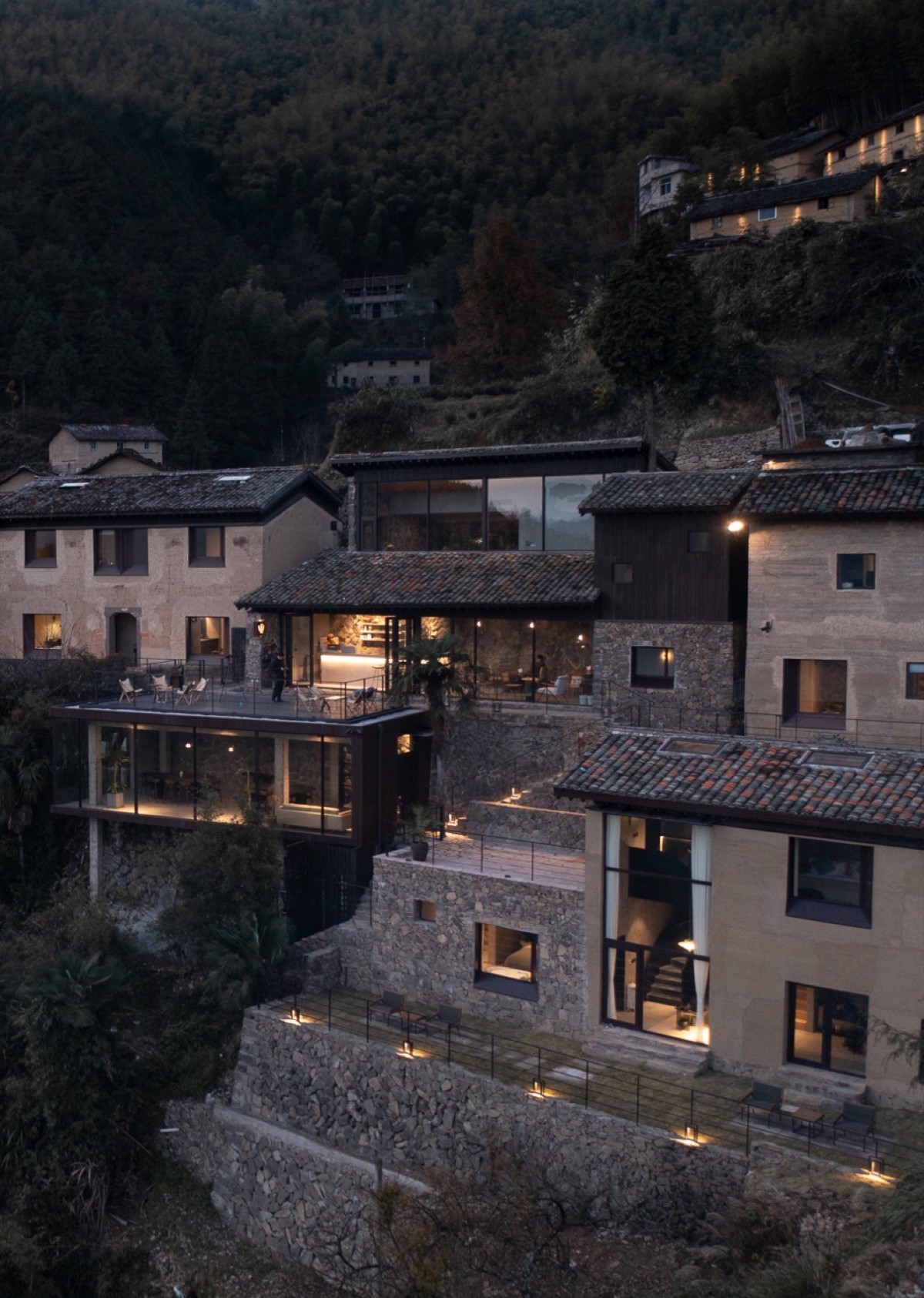
Photography / Project: Songyang · Fei Tua Ji Phase II / line+ Architecture Photography: Tang Xuguo
Something Harder Than “Looking Good”
These days, designing a beautiful bed-and-breakfast is no longer a particularly rare skill. Mature material systems, supply chains, and a wealth of excellent examples make it easy for us to find a solid aesthetic starting point.
The real challenge is ensuring that, once completed, the space still retains a sense of its own identity.
This quality can’t necessarily be summarized as a single style, nor does it have to become a so-called “viral” element. But when people step inside, they feel that the space is seamlessly connected to its surroundings. These days, I’ve actually come to appreciate projects like this more and more.
They don’t rush to define their style, nor is every corner just waiting to be photographed.
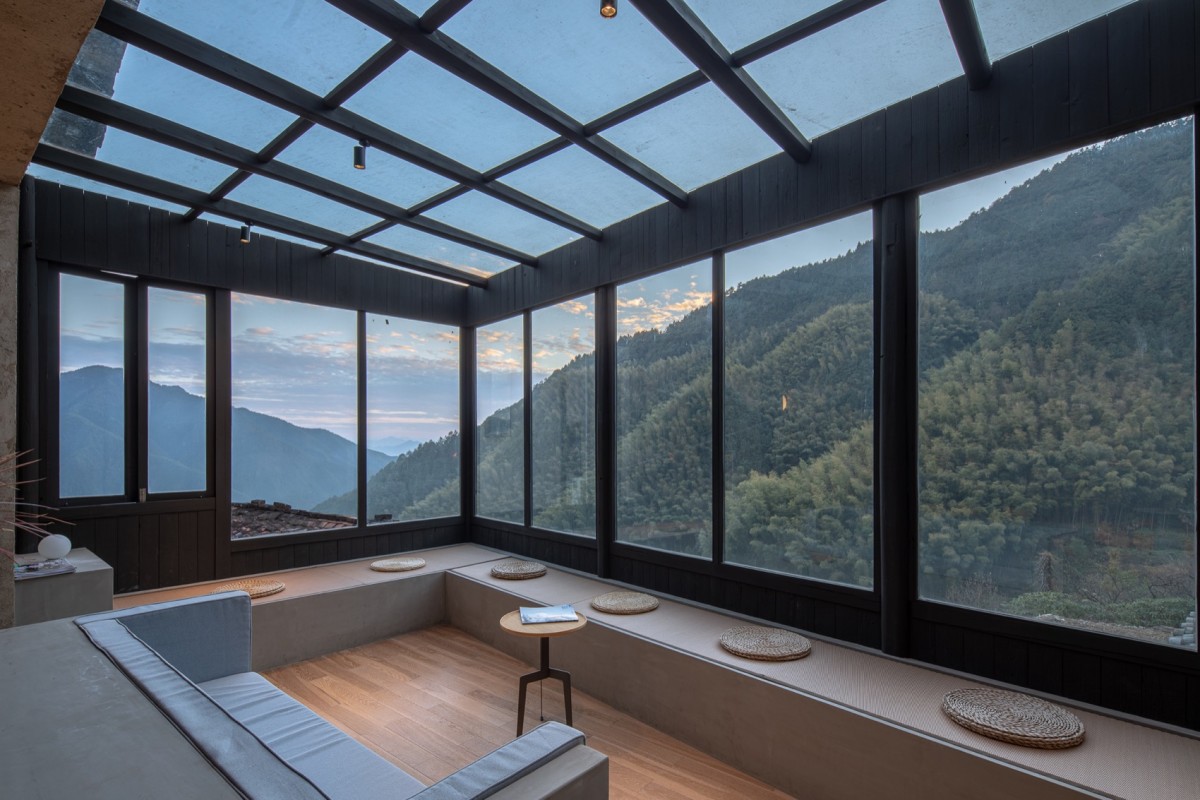
Photography / Project: Songyang · Fei Tsao Collection Phase II / line+ Architects Photography: Tang Xuguo, Chen Xi + Jin Zixiong
After just a moment’s look, you’ll feel:
“This house just wouldn’t feel right anywhere else.”{ {h168}}
Perhaps this is precisely what has become increasingly rare in the design of guesthouses.
01DES
Focuses on the space—and on why it has come to be the way it is.